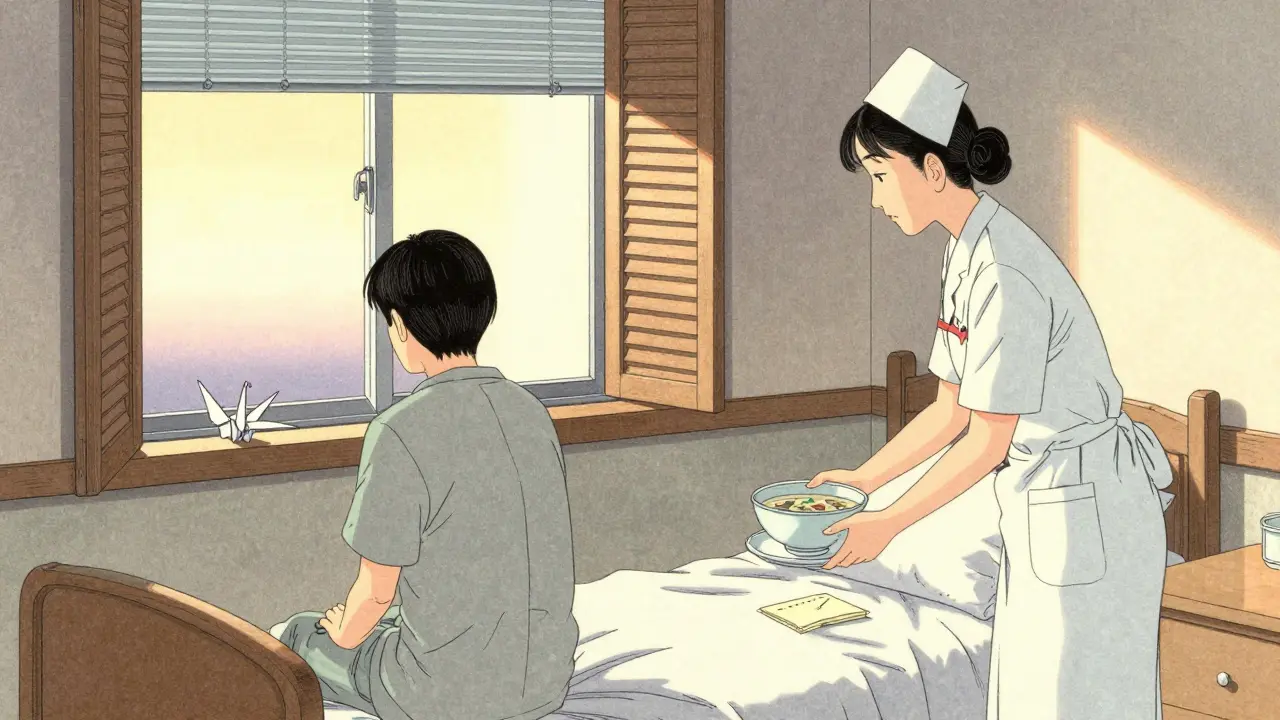
When someone survives a suicide attempt, the immediate aftermath isn’t about healing-it’s about survival. The body might be stable, but the mind is still in free fall. In the Czech Republic, where suicide attempts are among the most common reasons for involuntary psychiatric hospitalization, the first 72 hours after the attempt are the most critical. This isn’t just about preventing another try. It’s about reconnecting a person to life when they’ve lost all sense of it.
První 24-48 hodin: Bezpečnost je první krok
After a suicide attempt, the priority isn’t talking, not yet. It’s ensuring safety. This often means hospitalization on a psychiatric unit. In Czech hospitals, stays last between 14 and 28 days, depending on how severe the situation is and whether outpatient support is available. During this time, doctors don’t just check vital signs-they look for what’s underneath: depression, psychosis, trauma, or overwhelming life stressors.
Medication may be started if a mental illness is diagnosed. But drugs alone won’t fix this. What matters more is building trust. A patient who feels judged won’t open up. A patient who feels heard might just begin to believe they’re worth saving. This is the foundation of crisis intervention: connection over correction.
It’s also about removing access to means. If someone tried with pills, those are taken away. If it was a weapon or chemicals, they’re secured. Even simple things like sharp objects, ropes, or high windows are addressed. In Czech psychiatric wards, this isn’t just policy-it’s routine. And it works. Studies show that reducing access to lethal methods cuts repeat attempts by more than half.
Co dělat v prvním týdnu: Není to o tom, že „musíš být silný“
Many people think recovery starts with willpower. It doesn’t. It starts with being held-not fixed, not lectured, not pushed to “get over it.” After a suicide attempt, emotions are messy. You might feel relief. Or guilt. Or shame. Or anger. Maybe all of them at once. That’s normal. The feeling that you’ve failed, that you’ve disappointed others, that you’re a burden-it’s not a sign of weakness. It’s a symptom of pain.
Here’s what actually helps in the first week:
- Stay connected-even if you don’t want to. A phone call, a text, someone sitting quietly beside you. You don’t have to talk. Just be there.
- Don’t make big decisions-no quitting jobs, no breaking up, no moving cities. Your brain is still in shock. Wait.
- Stick to small routines-eat something, shower, sit outside for five minutes. Structure rebuilds stability.
- Call someone-the Lifeline (116 123) is free, anonymous, and open 24/7. You don’t need to be in crisis to call. You just need to be hurting.
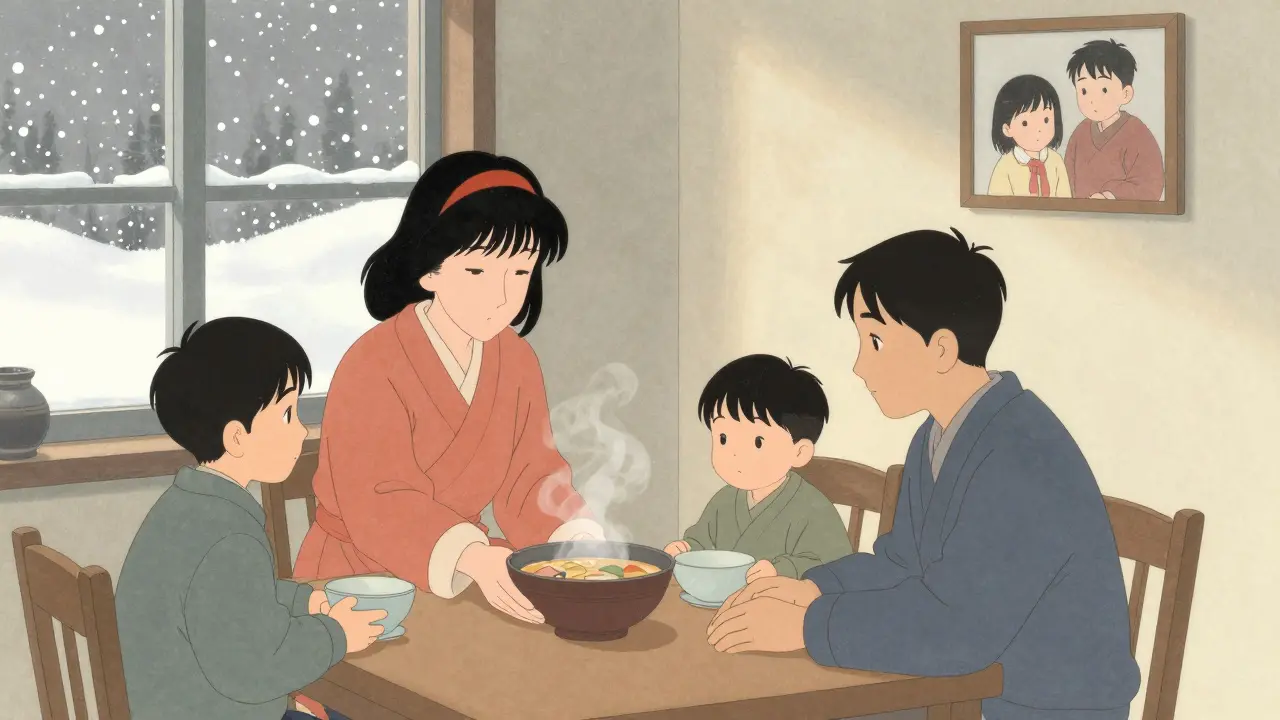
One man from Ostrava, who survived a drug overdose last winter, told me: “I didn’t want help. I didn’t think I deserved it. But my sister came every day with soup. She didn’t say a word about what happened. She just sat with me. That’s when I started to believe I might not be alone.”
Role rodiny a blízkých: Není vaše chyba, ale můžete pomoci
Families often feel lost. They don’t know what to say. They’re scared of saying the wrong thing. So they stay silent. That silence is deadly.
Here’s what works:
- Talk about it-not with pity, not with fear, but with honesty. “I’m worried about you.” “I’m here.” “I don’t understand, but I won’t leave.”
- Don’t minimize-avoid phrases like “It’s not that bad” or “You have so much to live for.” Those words feel like a slap.
- Get help too-you can’t pour from an empty cup. Family members need support. There are free counseling groups for families of suicide attempt survivors in Prague, Brno, and Olomouc.
For children and teens, family therapy isn’t optional-it’s required. In hospitals in Louny, Velká Bíteš, Opařany, and Motol in Prague, parents and siblings are part of every therapy session. Because suicide attempts in young people rarely happen in a vacuum. They’re often the result of long-term family conflict, bullying, or emotional neglect.
Asertivní péče: Když nemůžeš vyjít z bytu, přijde k tobě tým
In Prague and other cities, a new model called “assertive outreach” is changing lives. Instead of waiting for someone to show up at a clinic, a team-psychiatrist, nurse, social worker-goes to them. They knock on doors. They call. They come to the apartment if the person doesn’t answer.
This isn’t just kindness. It’s science. People with severe depression often can’t get out of bed. They can’t make calls. They can’t remember appointments. If you wait for them to ask for help, they might never get it.
Centra duševního zdraví (Mental Health Centers) in Prague, Brno, and Ostrava have reduced repeat suicide attempts by 67% using this method. They don’t just treat symptoms. They show up. And that changes everything.
Bezpečnostní plán: Co máš když se to znovu chce stát
A safety plan isn’t a list of “what to do if you feel bad.” It’s a survival roadmap. It’s written with your therapist, but it’s yours. Here’s what it includes:
- Warning signs-What thoughts, feelings, or behaviors tell you it’s starting again? (e.g., “I can’t sleep,” “I don’t want to talk to anyone,” “I’m clearing out my things”)
- Internal coping strategies-What calms you down? A song? A walk? A warm shower? Writing? Baking? List them.
- People to contact-Names, numbers, how to reach them. Not just “my mom.” But “Mom: 777 123 456. Call her if I’m crying and can’t stop.”
- Professional contacts-Your psychiatrist, crisis line, therapist.
- Safe environment-What needs to be removed? What needs to be locked away? Who can help with that?
One woman from Plzeň said: “I wrote mine on my phone. I didn’t believe it would help. But when I was lying on the floor again last month, I opened it. I called my sister. She came. And I didn’t try again.”

Podpora od lidí, kteří to prošli: Nejsi sám
There’s a program in the Czech Republic called “Nejsi sám” (You’re Not Alone). It pairs people who’ve survived a suicide attempt with others who have too. No therapists. No advice. Just shared silence, shared stories, shared understanding.
After six weeks, 89% of participants say they feel better. Why? Because they no longer feel like a mistake. They feel like a person.
Peer support doesn’t replace therapy. But it replaces isolation. And isolation is what kills.
Co neudělat: Přestaneme říkat „pomozte mi“ a začneme říkat „pomoz“
Too often, people wait. They think, “Maybe they’ll get better on their own.” Or “They just need time.” Or “It was a cry for help-they didn’t really mean it.”
That’s dangerous. In the Czech Republic, 78% of people who reached out for help within one week of their attempt saw major improvement in three months. Those who waited more than two weeks had 3.2 times higher risk of trying again.
And here’s the truth: 92% of people who get help within 72 hours don’t need hospitalization. That’s not a miracle. That’s prevention.
The new pilot project “Krize bez hranic” (Crisis Without Borders) in five regions is proving this. Since January 2023, it’s stabilized 1,850 people in crisis-without a single hospital bed. Just by showing up. Just by listening. Just by saying, “We’re here.”
Když se to znovu stane: Ještě nejsou ztraceni
One last thing: if you’ve tried before, and you’re trying again, you’re not failing. You’re still fighting. The fact that you’re still here means you’re still worth saving.
There’s no shame in needing help again. No weakness in asking. No failure in not being okay.
Call 116 123. Go to a Mental Health Center. Text a friend. Knock on a neighbor’s door. Don’t wait for the perfect moment. There isn’t one.
Help is waiting. Not to fix you. Not to judge you. Just to be with you.